
Warmer panes in January
Low-E Window Film in Nashville
Sit next to an old single-pane window in a Nashville church fellowship hall in January and you feel the cold coming off it. Sit there in August and you feel the sun. Low-E window film works on both complaints with one product.
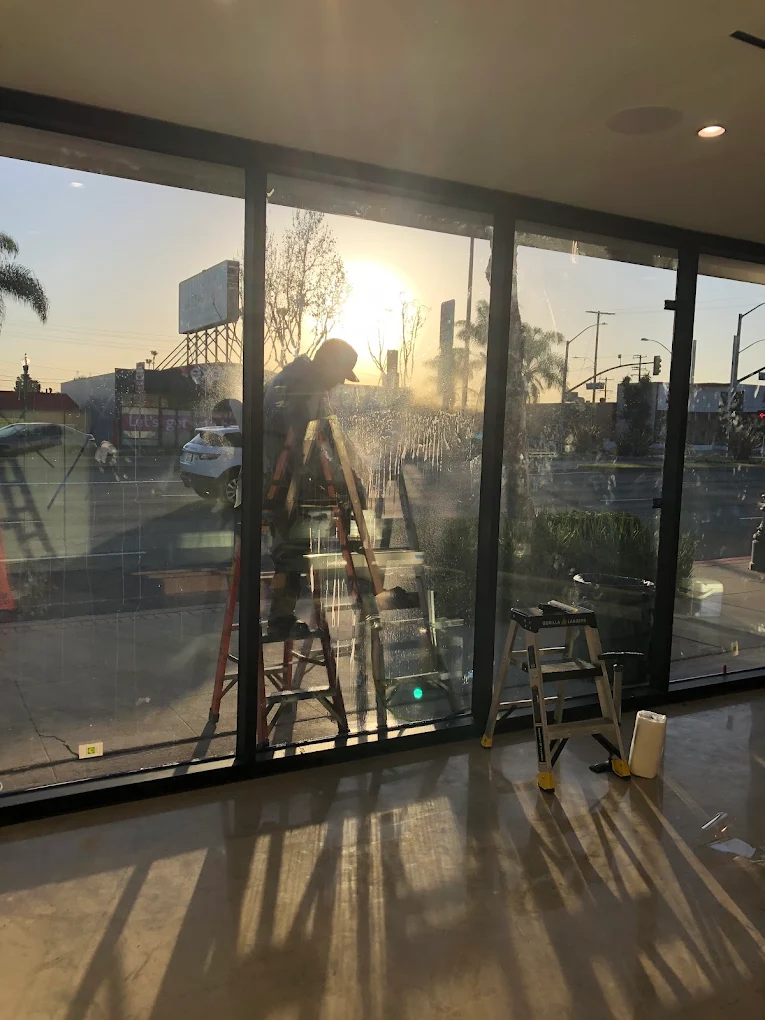 Nashville
What Low-E Window Film Does Differently From Solar Film
Every window film blocks some solar energy. A low-E film adds a second trick: a microscopically thin metallic layer with low emissivity, meaning it is poor at radiating heat. Warmth from the people, lights and furnace inside a room tries to radiate out through the glass in winter, and the coating turns much of it back.
Ordinary single-pane glass does the opposite. It soaks up indoor warmth and gives it to the outdoors, which is why the air near the window feels drafty even when the sash is tight. With the low-E layer in place, the glass surface stays closer to room temperature, and people along the perimeter stop reaching for sweaters. In summer the same film rejects solar heat much like a standard solar control product.
Why Middle Tennessee Winters Make Low-E Film Worth a Look
Nashville is a cooling-first city, but its winters are not trivial. Arctic air drops into the region a few times most years, and spells of several days below freezing, sometimes with ice on the roads and snow on the ground, are part of the pattern. Those are the days when a building with acres of single-pane glass struggles to stay warm and its heating bills spike.
A solar-only film helps the summer half of that story. On buildings where winter discomfort is a real complaint, a low-E product covers both halves, which is why facility managers at older schools and churches often ask about it first.
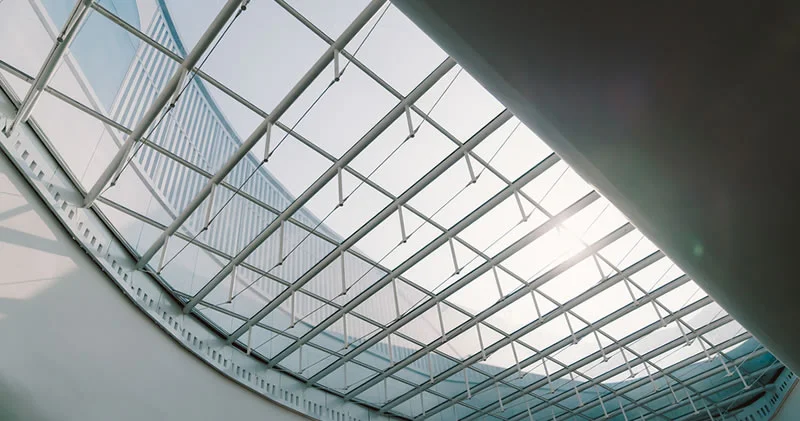
Low-E Film for Aging Classroom Wings and Sanctuaries Around Nashville
Davidson, Williamson, Rutherford and Sumner counties are full of mid-century and late-century buildings with large single-pane windows: classroom wings with walls of glass, sanctuaries and fellowship halls, county offices and libraries, and 1970s and 1980s office buildings with bronze-tinted glass. Replacing that glazing is a capital project that can take years to fund.
Low-E film works on the glass already there. Schools can schedule installation over summer break, churches between services, and offices on nights and weekends. Many owners treat the worst elevations first, usually the classrooms or offices on the west side, and add the rest in later budget years with the same film so the building looks uniform.
- Classroom wings with walls of single-pane glass
- Sanctuaries and fellowship halls
- County offices, libraries and community centers
- 1970s and 1980s offices with tinted single-pane glass
When Low-E Window Film Is and Is Not the Right Choice
The best candidate is single-pane glass, which has almost no insulating value on its own. Older dual-pane units without any factory coating also benefit. Newer insulated windows that already carry a low-E coating gain very little from a second one, and a selective solar film usually suits them better.
Before quoting, we check each glass type with a coating detector and look at the frames and seals. If a building has a mix, as many additions and renovations do, the proposal may combine low-E film on the old wing with solar film on the new one.
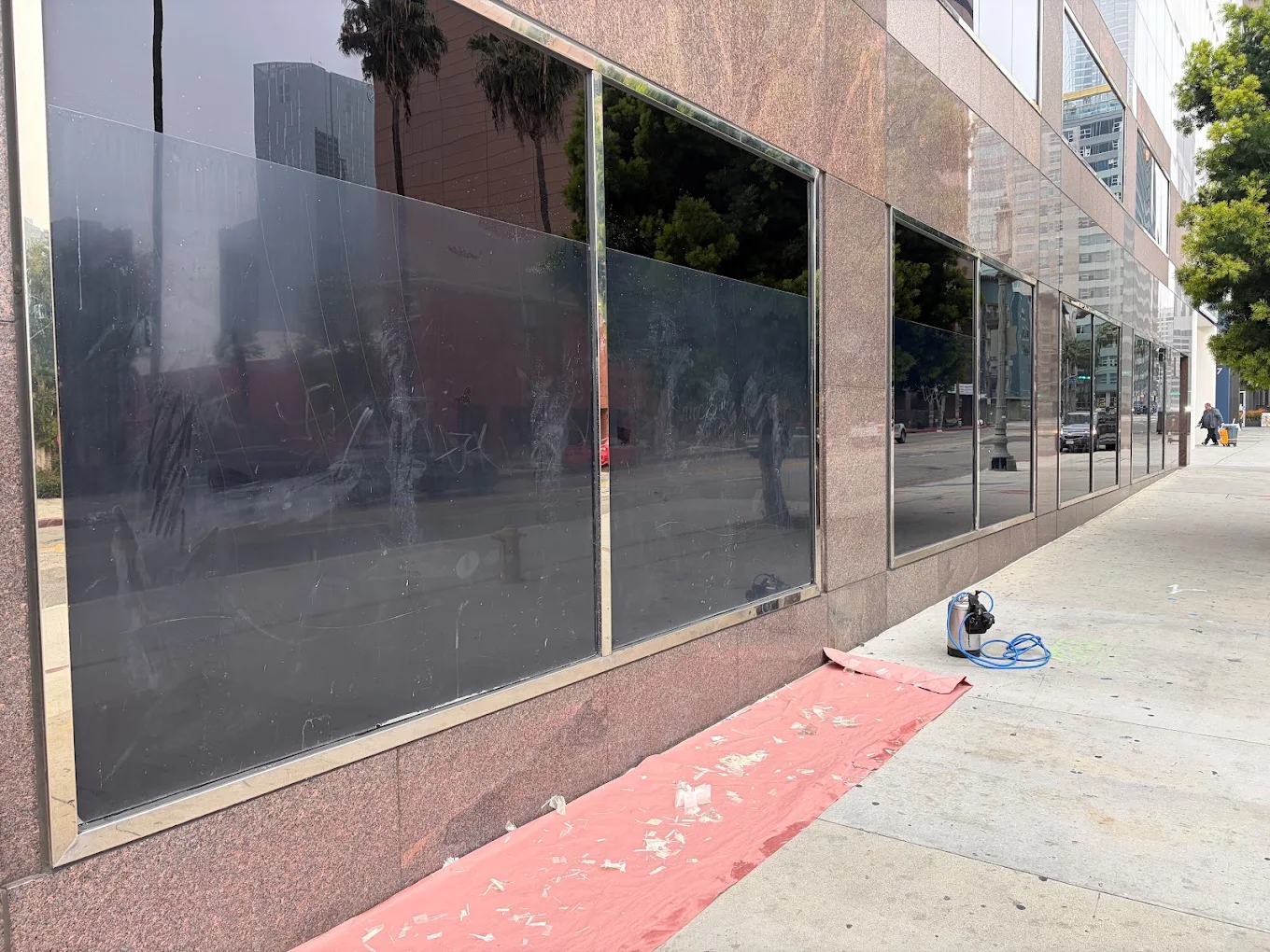
Low-E Film for Historic Commercial Buildings in Nashville and Franklin
Historic storefronts on Second Avenue, the brick commercial blocks of Germantown and downtown Franklin, and old church buildings across the region often have original glass that review boards want kept. New windows may not be an option at all. Low-E film improves that glass without touching the sash or frame.
Several low-E films are close to clear, so the building keeps its look from the street. We supply product data for any historic commission review and test samples on a single pane before committing a whole facade.
Low-E Window Film Results in Middle Tennessee Buildings
Warmer Window Zones During Nashville Freezes
The low-emissivity layer keeps more of a room's heat indoors, so the glass surface stays warmer and people seated along old single-pane windows feel far less chill on the coldest mornings.
Summer Solar Heat Cut on the Same Glass
The film also rejects a big share of incoming solar heat. One product handles the west classroom in August and the drafty sanctuary in January, so owners do not have to choose a season.
Low-E Glass Upgrade Without a Window Project
Film goes onto glass already in the frames. There is no demolition, no scaffolding for most interior work and no waiting on a replacement window order that a school or church budget cannot cover this year.
Low-E Film That Keeps Historic Glass Looking Original
Near-clear low-E films leave old storefronts and church windows looking as they always have from the street, which keeps historic reviews simple and the character of the building intact.
Questions About Low-E Window Film for Nashville Buildings
Our building got new windows in 2015. Do we need low-E film?
Probably not. Windows from that era usually carry a factory low-E coating already. We can test the glass on site, and if the coating is there, a selective solar film is the better spend.
Will low-E film tint our windows?
Some low-E films are nearly clear and others have a light neutral tint. We tape both kinds to a pane so you can compare them in your own light.
Can a historic building use low-E film?
Usually, as long as the glass is sound. The film sits on the interior and leaves the window unaltered. Confirm with the local historic commission if the building is in a district.
What service life should we plan on?
Interior low-E film generally serves well over a decade. The exact term comes from the manufacturer's commercial warranty for the product chosen.
Window film quote
Check Whether Low-E Window Film Fits Your Nashville Building
Describe the building, roughly when its windows went in, and which rooms people complain about in winter or summer. Send that through the quote form and we will confirm whether low-E film is the right product.